

 Updated 21 May 2026
São Tomé and Príncipe citizenship by investment
Citizenship through a non-refundable contribution from US$90,000. The application is remote apart from one biometrics appointment, which can be completed outside São Tomé and Príncipe.


Alesya Razinkevich
Prepared byAuthor of guides to property and residence programmes

Mikhail Bulanov
Reviewed byCo-founder and managing partner of Tranio, real estate investment expert
from US$90,000
Non-refundable contribution to the National Development Fund
2–3 months
Indicative processing time
CPLP membership
A potential route to residence in Portugal under the applicable CPLP rules
Nationality screening
Eligibility is subject to due diligence and sanctions checks
How the programme works
Discuss your optionsSão Tomé and Príncipe launched its citizenship-by-investment programme in September 2025 under Decreto-Lei No. 07/2025. It is administered by the Citizenship Investment Unit (CIU) under the Ministry of Planning, Finance and Digital Economy. The first applications have been approved and passports issued.
The programme has one investment route: a non-refundable contribution to the National Transformation Fund, starting at US$90,000 for one applicant. It does not include a property or project-investment option.
São Tomé and Príncipe is a member of the Community of Portuguese Language Countries (CPLP). Its citizens may qualify for Portugal’s CPLP residence framework under the rules in force at the time of application. Portuguese citizenship is not automatic: applicants must first obtain and maintain legal residence, meet the residence period and satisfy the language and other naturalisation requirements.
The passport does not provide visa-free access to the Schengen Area, the UK or the US. Its strengths are a relatively low entry threshold, a straightforward contribution route and the option to complete biometrics outside the country.
International mobility
For applicants seeking an additional citizenship as part of a wider residence, business or succession strategy
Minimum budget
One of the lowest entry thresholds among current citizenship-by-investment programmes
Path to Portugal
For applicants considering Portuguese residence under the applicable CPLP framework
Entrepreneurs and investors
An additional citizenship can support international structuring, although every bank and service provider applies its own compliance rules
What the passport offers
Additional citizenship
A lifelong status that can form part of an international mobility and family-planning strategy
~63 countries
Visa-free, visa-on-arrival or electronic entry to destinations in Africa, Asia, Latin America and Oceania
CPLP membership
Potential eligibility for Portugal’s CPLP residence framework, subject to the rules in force
Lifetime citizenship
Citizenship is lifelong and can be passed to future generations under the applicable law; the passport is renewed periodically
Visa-free countries
~63 countriesAfrica
32Latin America and the Caribbean
16Europe
1Asia and Middle East
13Oceania
4Source: IATA Timatic. Entry rules can change and should be checked before travel. Standard visas are generally required for the Schengen Area, the US, the UK, Canada, Australia and Japan.
Application costs and fees
The cost of the programme consists of two mandatory components: a non-refundable subsidy to the National Development Fund and a fixed application fee.
After approval, additional passport fees are paid for each family member: passport fee $350, national ID $150, citizenship certificate $250. Licensed agent remuneration is separate. There are no real estate options in the programme.
Requirements for the applicant
Main applicant
Age from 18 years
Confirmed legal source of funds
No sentence of imprisonment for more than 3 years
Absence from OFAC, UN and EU sanctions lists
Medical insurance for the period of registration
No knowledge of Portuguese required
No need to visit São Tomé and Príncipe
Family members in one application
Spouse — no age limit
Children under 30 years of age — if unmarried, dependent, studying full-time
Adopted children — under the same conditions as their own children
The applicant's parents or spouse — from 55 years of age with confirmation of financial dependence
Grandparents are not included in the application — the current programme regulations (Decreto-Lei No. 07/2025) do not provide for this category.
Application process
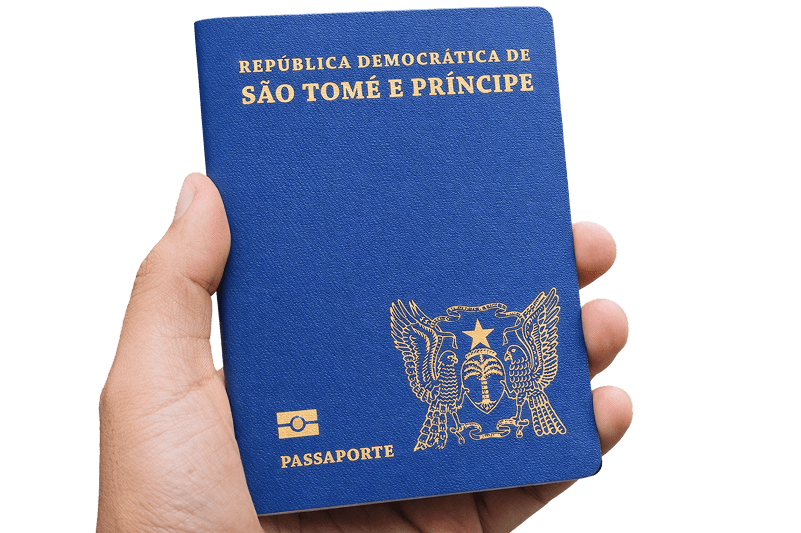
The application is remote apart from biometrics, which can be completed at one of four authorised locations. Processing normally takes 2–3 months.
Step 1 — Preliminary check and composition of the application
Tranio analyses the situation: family composition, source of funds, goals. We determine the composition of the application and identify possible obstacles before the preparation of documents begins.
Step 2 — Preparing a package of documents
We collect: passports, police clearance certificates, financial documents to confirm the source of funds. We organise apostille and notarised translations.
Step 3 — Application to the CIU
The complete file is submitted to the Citizenship Investment Unit and the government due-diligence fee is paid.
Step 4 — Review and approval
The CIU reviews the applicant’s background, source of funds and eligibility before issuing its decision.
Step 5 — Transfer of contribution and taking the oath
After approval, the applicant pays the contribution to the National Development Fund and takes the oath remotely.
Step 6 — Biometrics and obtaining a passport
Biometrics can be completed at an authorised location in Lisbon, Dubai, Luanda or Taipei. The passport, citizenship certificate and identity card are then delivered.
Eligibility, documents and compliance
Check your eligibilityEligibility depends on nationality, residence history, sanctions screening and due diligence. Document legalisation and translation requirements depend on the country of issue.
Identification documents
Passports, civil-status records and police certificates must be legalised or apostilled as required and translated into Portuguese or English
Financial documents
The CIU requires evidence of the lawful source of funds, such as bank statements, tax returns and corporate records. Complex wealth structures may require a source-of-wealth memorandum
Sanctions and eligibility
Personal sanctions and other compliance concerns can lead to refusal. The assessment considers nationality, residence history and individual risk factors
Biometrics
Applicants can choose among the authorised biometrics locations based on their travel documents and entry requirements
Banking and compliance
The programme is new, and financial institutions may apply enhanced checks to a recently issued passport. A second citizenship does not guarantee access to an account or financial service
Obligations in your current country
Some countries require citizens or residents to report the acquisition of another citizenship. Applicants should obtain advice on the rules that apply to them
Tax residence, military service and multiple citizenship
Taxes in São Tomé and Príncipe
Citizenship does not require residence in the country. Tax treatment depends on residence, income and individual circumstances
Army
The application of military-service rules to citizens living permanently abroad should be checked for the individual case
Multiple citizenship
São Tomé and Príncipe recognises multiple citizenship. Applicants should also check the rules of their current country or countries of citizenship
Comparison with alternatives
At the lower end of the citizenship-by-investment market, the main comparison is with Vanuatu. Caribbean programmes have different travel benefits and stricter nationality rules.
| Country | Min. investment | Processing time | Return on investment | Schengen | Nationality restrictions |
|---|---|---|---|---|---|
| São Tomé and Príncipe | from $90,000 | 2–3 months | no | no | yes |
 Vanuatu Vanuatu | from $130,000 | 2–4 months | no | no | yes |
 Egypt Egypt | from $250,000 | 6–9 months | yes | no | yes |
 Grenada Grenada | from $235,000 | 8–10 months | no | yes | no |
 Türkiye Türkiye | from $400,000 | 6–9 months | yes (after 3 years) | no | yes |
Vanuatu is a longer-established programme with a different travel network. São Tomé and Príncipe has a lower contribution threshold and CPLP membership. Neither passport guarantees access to banking or residence in another country.
Programme limitations
Review the limitationsNo visa-free access to Schengen, the UK or the US
Standard visas are required. Applicants should choose the programme for its contribution threshold and strategic value rather than as a European travel document.
The fee is non-refundable
The contribution to the National Development Fund is non-refundable. There are no alternative options with a return on investment in the programme.
Biometrics only in four cities
Authorised biometrics locations currently include Lisbon, Dubai, Luanda and Taipei. The most convenient option depends on the applicant’s travel documents and entry requirements.
No real estate option
The only official route is a non-refundable contribution to the National Development Fund. Property or hotel-share offers do not form part of the programme under Decreto-Lei No. 07/2025.
Other citizenship-by-investment options
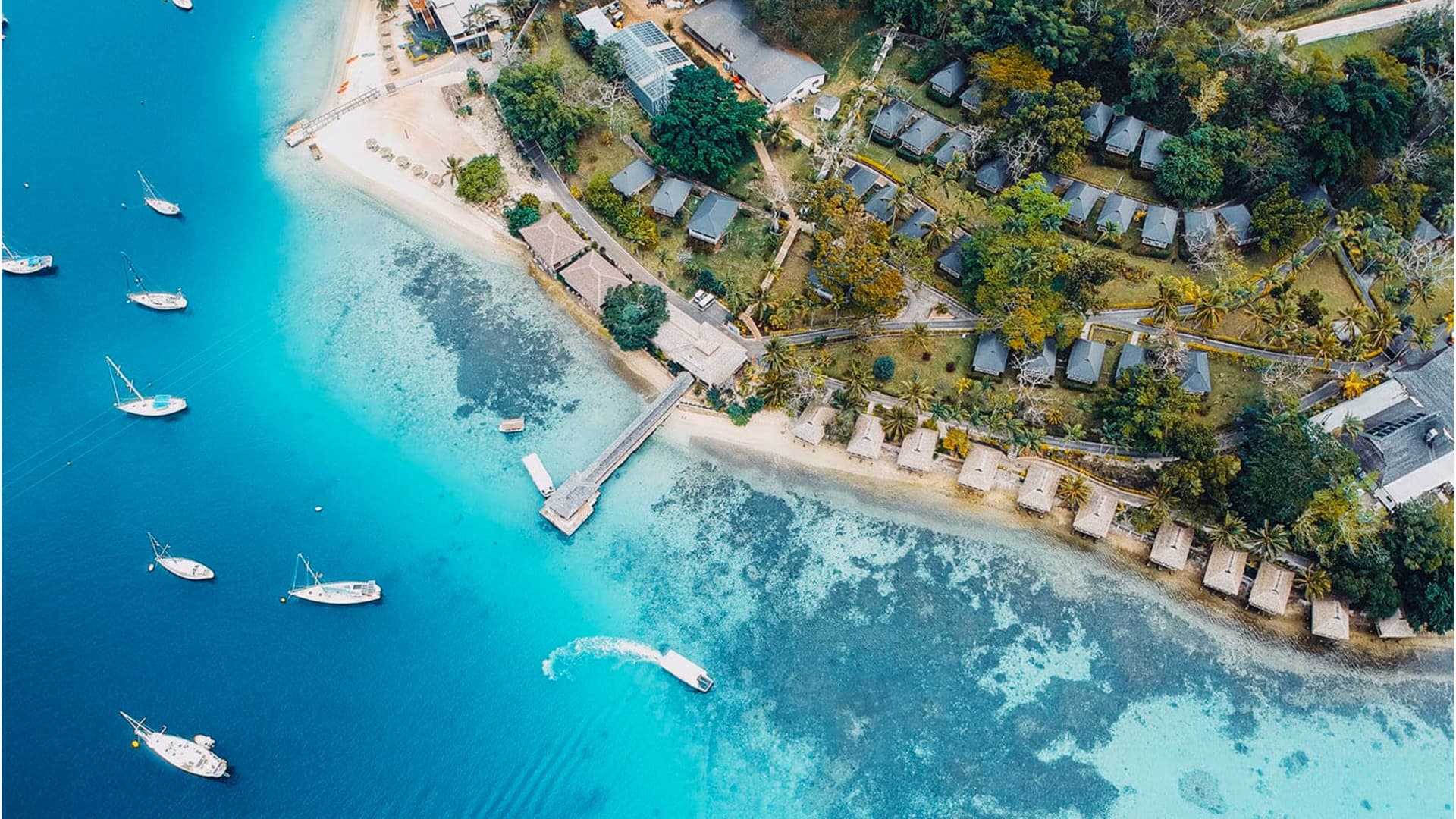


When to consider other options
01
You need visa-free access to the Schengen Area, the US or the UK
02
Recovering the investment is important — consider Türkiye or Egypt
03
You prefer a longer-established citizenship programme
04
If there are personal sanctions from OFAC, the UN or the EU, the programme will be denied
05
You want a passport with a stronger travel network and meet the relevant nationality rules
Expert opinion
“São Tomé and Príncipe has one of the lowest entry thresholds among current citizenship-by-investment programmes. Its value is not visa-free travel to Europe, but a straightforward contribution route and the possibility of using the status as one element of a wider mobility or residence strategy.”

Kseniya Nass
Tranio expert on residence and citizenship programmes
How Tranio can help
Book a consultationTranio works directly as a licensed agent for key programmes and supports clients at every stage. For São Tomé and Príncipe, Tranio International Ltd. holds Marketing Agent licence STP-2026–113 issued by the CIU under Decreto-Lei No. 07/2025.
Review the source of funds and compliance profile before filing
Prepare the documents, legalisation and authorised translations
Arrange biometrics at a suitable authorised location
Explain the CPLP framework and compare relevant residence options
Frequently asked questions
No. The application is remote apart from biometrics, which can be completed in Dubai, Lisbon, Luanda or Taipei.
No. Standard visas are required for the Schengen Area, the US and the UK. The passport’s travel network is concentrated in Africa, Asia, Latin America and Oceania.
No. Membership in the CPLP gives the right to a simplified residence permit in Portugal, but does not cancel the 5-year residency requirement. You will still have to live in Portugal and take a language exam. The promise of an EU passport in 1–2 years is a marketing myth.
The contribution for one applicant is US$90,000, plus a US$5,000 application fee. Passport, due-diligence and professional fees are additional. The final budget depends on the family composition.
Spouse, children under 30 years of age (single/unmarried, dependent, students), adopted children, parents of the applicant or spouse over 55 years of age. Grandparents are not provided for in the current regulations.
Yes. Reasons can include sanctions exposure, serious criminal convictions, inaccurate information or an unacceptable source of funds. Nationality and residence history are also assessed under the programme rules.
Yes. São Tomé and Príncipe recognises multiple citizenship. Applicants should also check the rules of their current country or countries of citizenship.
The programme is based on Decreto-Lei No. 07/2025 and is administered by the CIU. Applications have been approved and passports issued, but the programme remains new. Applicants should allow for evolving procedures and enhanced checks by financial institutions.
Popular residence programmes




The Tranio ecosystem
Residence or citizenship is only one stage. With Tranio, these goals can be addressed by one team.

We select and arrange residence, permanent residence and second citizenship around your goals and long-term plans.

We help you choose and buy overseas property with full transaction support.

We advise on international investments, ownership structures and substantial private wealth.